
My Cat Sort:Pet Puzzle
ziyaokejiTrivia
5.06.00 Reviews
- Version
- 1.0.7
- Installs
- 10.00K
- Age Rating
- Everyone
Screenshots
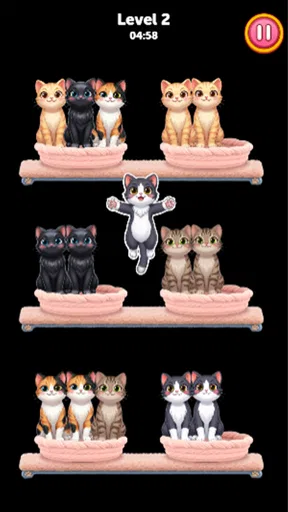
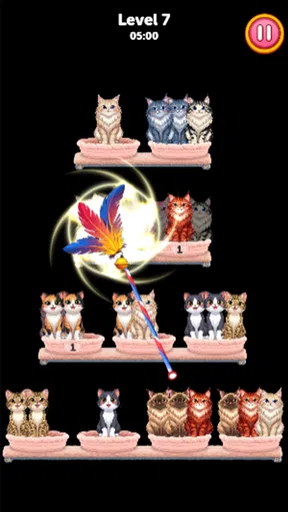
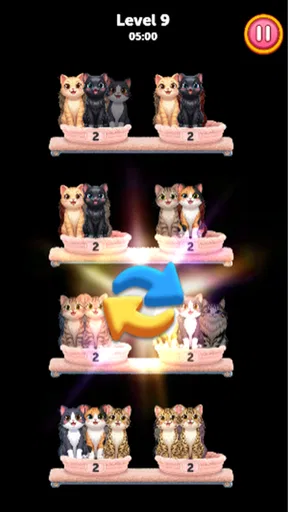
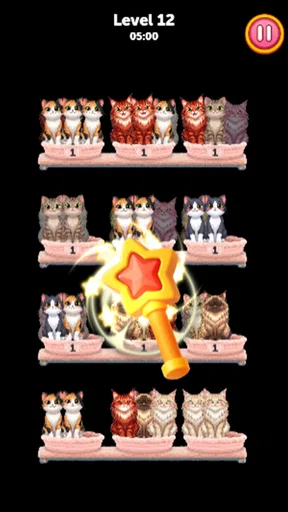
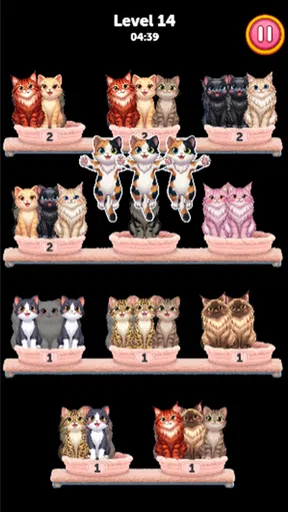
Our Review of My Cat Sort:Pet Puzzle
 Analysis by Appyee
I approached My Cat Sort: Pet Puzzle as a quick, low-pressure trivia game with a visual cat theme, but its real appeal is the way it asks me to slow down and think before making a move. The central idea is simple: grooming adorable cats becomes a small logic and strategy challenge. That combination makes the game easy to understand at first glance, while still leaving room for mistakes when I rush.
My first impression is that this is best suited to short sessions rather than a long, story-driven gaming commitment. I can imagine opening it while waiting for an appointment, taking a break from work, or looking for something gentler than a competitive action game. The free entry point also makes it easy to try without making an immediate purchase decision, although optional in-app items range from $0.99 to $99.99 per item, so I would pay attention during any purchase prompt.
What the first few minutes feel like
The game’s presentation points toward a friendly, approachable experience rather than a demanding technical challenge. Cats provide the emotional hook, but the puzzle element is what gives each interaction purpose. Instead of simply watching cute characters, I need to consider what order makes sense and avoid treating every move as interchangeable.
That distinction matters for new players. If I tap quickly because the scene looks obvious, I can easily miss the strategic part. My most useful early habit is to pause and inspect the available situation before committing. I look for the action that creates the most room for the next step, rather than choosing the first move that appears to work.
The store summary describes grooming cats as a test of logic and strategy, and that is a more useful expectation than assuming this is only a decorative pet game. Someone searching for a deep trivia database or a conventional question-and-answer quiz may not find the format familiar. Here, the “trivia” label sits alongside visual problem solving, so the experience is more about recognizing patterns and planning than recalling facts.
That makes it approachable for players who enjoy puzzles but do not want complicated controls. I do not need to learn a large control scheme before getting started. The challenge comes from understanding the arrangement and making careful choices, not from mastering fast reactions.
Who is likely to enjoy it
I would recommend giving it a chance if you like compact logic games, cute animals, and challenges that can be understood in a few seconds. It also suits people who prefer a calm pace and want a game that can be picked up without remembering a long plot or a complicated inventory.
It is less suitable if your ideal trivia game is built around geography, history, science questions, or head-to-head competition. It is also not the first choice for someone seeking a large adventure with character development and extensive exploration. The cat theme is inviting, but the core experience remains a focused puzzle activity.
The Everyone age rating reinforces the accessible tone. I would still keep the purchase settings in mind when letting a child use the device, especially because optional items are available. The game itself is easy to introduce to a family member, but a quick conversation about not confirming purchases without permission is sensible.
Getting started without overthinking the setup
The developer is ziyaokeji, and the current release is version 1.0.6. It runs on Android 7.0 or later, which covers a broad range of devices. For a first-time player, the practical point is that the installation requirement is not aimed only at recent phones, although the actual feel can still depend on the device and how smoothly it handles the game.
Because the game is free to install, I would begin with a trial mindset: open it, understand the first puzzle, and decide whether the interaction feels satisfying before considering any optional purchase. That approach is especially useful here because the main question is not whether the cat theme looks pleasant; it is whether the logic loop holds my attention after the novelty wears off.
My recommended first setup is deliberately simple. I would make sure the phone has a comfortable amount of battery, open the game somewhere without distractions, and avoid tapping through the opening screens too quickly. The first few moments are when I learn how the game communicates a valid action, an unavailable action, and a mistake. Those visual cues are more important than any imagined advanced technique.
I would also avoid judging the game from a single rushed attempt. Puzzle games often feel less clear when I am trying to discover the rules and solve the challenge simultaneously. A better approach is to use the opening round as a lesson: observe what changes after each action, then apply that information deliberately.
How I reach the first meaningful success
My first useful goal would not be speed. It would be completing an early grooming challenge while understanding why the sequence worked. That difference turns a lucky solution into a repeatable skill. Before acting, I scan the whole arrangement and ask which option might block another one if I use it too soon.
A practical routine is to identify the most constrained part of the puzzle first. If one cat or grooming opportunity appears to have fewer useful possibilities than the others, I treat it as the priority. I then check whether solving it opens space or changes the choices around it. This kind of forward planning is more reliable than moving from left to right or simply selecting the most visually prominent cat.
When I make an error, I try to treat it as information rather than a failure. The important question is not only “which move was wrong?” but “what did that move prevent?” That answer often reveals the game’s strategic rhythm. A move can look productive while quietly removing the option needed later, which is why the safest-looking action is not automatically the best one.
For a first-time user, I would recommend repeating the opening challenge once after success if the game allows it naturally. The purpose is to confirm that I understood the logic rather than accidentally stumbled into the right sequence. This is one of the more valuable ways to use a short session: learn the pattern of decisions, not just the result.
The best early habit is to plan one move beyond the action you are about to take. That small pause helps separate this game from a simple tapping exercise. It also gives the player a clear path from installation to a genuine sense of progress.
Where new players may become confused
The cute visual style can create an expectation that every action is harmless. In a strategy puzzle, however, the order of actions matters. A player may see a grooming opportunity and assume it should be taken immediately, only to discover that the move changes the remaining options. I found it more helpful to read the board as a set of relationships rather than as a collection of individual cats.
Another possible point of confusion is the category itself. Calling the game trivia may lead some people to expect written questions and answers. The actual attraction is closer to visual reasoning with a pet-care theme. If you install it expecting a traditional quiz, give the first challenge a fair try before deciding it is not for you; the label does not fully convey how the interaction feels.
It is also easy to mistake a quick solution for a complete understanding of the game. Early puzzles may teach the basic rhythm, but later decisions can require more attention to consequences. I would resist developing a habit of tapping through every available option. Instead, I look for the move that preserves flexibility and makes the next decision clearer.
Purchase prompts are another area where I would remain alert. The game is free, but optional in-app purchases are present. I would not assume that a prompt is necessary for ordinary experimentation, and I would check what I am confirming before using a payment method. This is particularly important on a shared family device.
Turning short sessions into better decisions
Once I understand the opening interaction, I use a simple three-pass method. First, I observe the full puzzle without touching anything. Second, I identify the action that seems most restrictive and consider its consequence. Third, I make the move and reassess the entire arrangement instead of following an automatic sequence.
This method is useful because the visual theme can encourage impulsive play. The cats make the board feel welcoming, but the solution still benefits from a measured approach. I also find it helpful to pause after a successful action, even when the next move appears obvious. The board may now offer a different set of priorities.
A second tip is to separate progress from perfection. If I am playing during a short break, I focus on understanding one puzzle rather than trying to finish a large run. That keeps the game relaxing and makes it easier to notice which decisions are actually improving my reasoning.
A third tip is to use mistakes to build a personal checklist. After an unsuccessful sequence, I ask whether I acted too early, failed to notice a blocked option, or assumed that two choices had the same consequence. Over time, those questions become a compact strategy guide that is more useful than blindly repeating the same attempt.
These habits also show where the game’s limits may appear. Players who enjoy elaborate progression systems, extensive customization, or a large variety of modes may find the focused format narrow. Its strength is the immediacy of the puzzle, not the promise of a huge world. I would choose a broader puzzle collection if I wanted several distinct mechanics in one app.
How it compares with familiar alternatives
Compared with a standard trivia quiz, this game asks less of my memory and more of my ability to organize actions. A conventional quiz is ideal when I want a clear question, a quick answer, and perhaps a score based on knowledge. My Cat Sort: Pet Puzzle is a better fit when I want to examine a situation, predict consequences, and improve through trial and observation.
Compared with a pure match-style puzzle, the cat-grooming theme gives the experience a more specific personality. A match game often rewards pattern recognition and rapid combinations, while this title’s appeal comes from deciding what should happen first. That makes it feel less frantic, though players who want constant visual effects and fast chains may prefer the alternative.
Compared with a virtual pet app, the game places the puzzle before open-ended care. I am not approaching it primarily as a simulation in which I freely manage a cat’s daily life. The grooming idea frames the challenge, while the logic decisions provide the actual reason to keep playing. That distinction helps set expectations before installation.
The strongest comparison is therefore not about graphics or size, but about attention. This is a compact reasoning game with a friendly wrapper. I would choose it over a competitive title when I want a calmer mental exercise, but I would choose a dedicated trivia app when I specifically want fact-based questions or a wider knowledge range.
Everyday situations where it fits
Imagine I have ten minutes before a train arrives. I can open the game, study a challenge, and work through a small sequence without needing to remember a storyline. If I get interrupted, the experience is still easier to return to than a narrative game because the immediate task is visible and concrete.
It can also work as a gentle break between demanding tasks. I would not use it when I need complete mental rest, since solving the puzzle still requires concentration, but it is a different kind of attention from reading messages or watching short videos. The cat theme helps make that effort feel lighter.
For a parent and child, the game could become a conversation about planning: “What happens if we choose this one first?” I would guide rather than solve every challenge, because the useful skill is learning to predict consequences. The Everyone rating makes the tone approachable, while the presence of optional purchases means I would keep control of transactions on a shared device.
What to expect as interest develops
The rating shown for the game is a 5.0 average from around 148 ratings, with six written reviews, and it has passed 10K+ installs. Those figures suggest that it has found a small but very positive audience so far, rather than proving that it will suit every puzzle player. I would treat the rating as an encouraging sign and still use the free installation to form my own opinion.
The version number and release date also place the game in a relatively early stage: it was released on May 15, 2026, and is currently at 1.0.6. For me, that means I would approach it as a focused title whose future experience may depend on how it develops, while judging the version available now on its own terms.
The main long-term question is variety. If the game keeps presenting situations that make me rethink the order of actions, I can see it remaining useful for short sessions. If the puzzles begin to feel repetitive, its narrow focus may become noticeable sooner than it would in a larger trivia or puzzle collection.
I would also decide early whether optional purchases add value for my own play style. Since the game can be installed for free, I do not need to spend money to test the basic loop. Anyone who dislikes in-app purchase prompts or prefers a one-time purchase model should be especially cautious and review each confirmation screen carefully.
My recommendation for a first download
I recommend trying it if you want a friendly, compact logic game built around cats and grooming rather than a conventional question bank. Start slowly, inspect the first challenge, and measure success by understanding the sequence. That approach gives the game its best chance to show what makes it different from a basic tap-to-answer quiz.
I would skip it if you need competitive multiplayer, fact-heavy trivia, a long adventure, or a broad collection of unrelated puzzle types. The appeal is specific: visual strategy, approachable presentation, and short decision-focused sessions. Those qualities are strengths for the right player, but they are not substitutes for every kind of mobile game.
After spending time with it, my view is that the cat theme is the invitation, while the ordering decisions are the real game. I like that it can be picked up quickly without demanding a large time commitment, and I appreciate that careful observation matters more than frantic tapping. Its focused design and optional purchases are worth keeping in mind, but for a first-time player looking for a gentle logic challenge, My Cat Sort: Pet Puzzle is an easy game to try and a pleasant one to return to when I want a small puzzle with a clear purpose.
Verdict
Strengths of My Cat Sort:Pet Puzzle
- Simple drag-and-drop controls are easy for players of all ages.
- Short levels make it convenient for quick gaming sessions.
- Cute cat designs give the sorting puzzles plenty of visual charm.
- Gradually harder layouts provide a gentle learning curve.
- Offline play is useful when you have no internet connection.
Limitations of My Cat Sort:Pet Puzzle
- Repeated sorting tasks can feel monotonous after extended play.
- Some levels may rely more on trial and error than strategy.
- Ads can interrupt the experience, especially between puzzle rounds.
- Limited variety may reduce long-term appeal for frequent players.
- Progression may feel slow without optional in-app purchases.
Similar Picks in This Category
View All
Millionaire 2026 Quiz & Trivia
Quiz & Trivia Games by Submarine Apps4.5

Brain Test 2: Tricky Stories
Unico Studio4.7

Trivia Crack: Brain Quiz Games
etermax4.4

QuizzLand. Quiz & Trivia game
Quiz & Trivia Games by Mno Go Apps4.8

Brain Test: Tricky Puzzles
Unico Studio4.7

Logo Quiz
bubble quiz games4.5
Frequently Asked Questions
What is My Cat Sort: Pet Puzzle, and how is the gameplay structured?
My Cat Sort: Pet Puzzle is a casual sorting game centered on adorable cat-themed pieces. Each level asks you to organize cats or matching items into the correct spaces, usually by planning moves carefully and grouping similar elements together. The early stages are simple and relaxing, while later puzzles introduce more crowded layouts and require better planning. It is designed for short play sessions, making it suitable for casual players.
Is My Cat Sort: Pet Puzzle free to download and play?
The game can generally be downloaded for free, but the experience may include optional in-app purchases. These purchases can provide coins, boosters, extra moves, or other helpful items, depending on the level and version available on your device. Players should also check the store listing for advertising details and regional pricing. You can normally progress without paying, although difficult stages may encourage the use of optional assistance.
Does My Cat Sort: Pet Puzzle require an internet connection?
Many sorting levels can usually be played without a constant internet connection, which makes the game convenient for travel or short offline sessions. However, certain features may depend on connectivity, including advertisements, cloud saving, events, rewards, updates, and purchases. Because offline availability can vary between versions, it is best to test the game after installation and review the developer’s current store description before relying on it without mobile data.
Is My Cat Sort: Pet Puzzle suitable for children and all age groups?
The colorful cat theme and straightforward sorting mechanics make My Cat Sort: Pet Puzzle approachable for many children, teenagers, and adults. Nevertheless, parents should review the game’s advertising, in-app purchase, and data-collection settings before allowing younger players to use it. Some puzzles can become challenging, and optional purchases may be visible during play. Using parental controls and disabling unauthorized payments is recommended for family devices.
Are there ads, boosters, or difficulty limits in My Cat Sort: Pet Puzzle?
The game may use advertisements as part of its free-to-play model, often offering optional rewards in exchange for watching a video or displaying ads between activities. Boosters or extra moves may also be available when a puzzle becomes difficult, either through gameplay rewards or optional purchases. The exact frequency and pricing can change with updates. Players who prefer uninterrupted sessions should check the current version’s settings and store information.
Play our best games!


